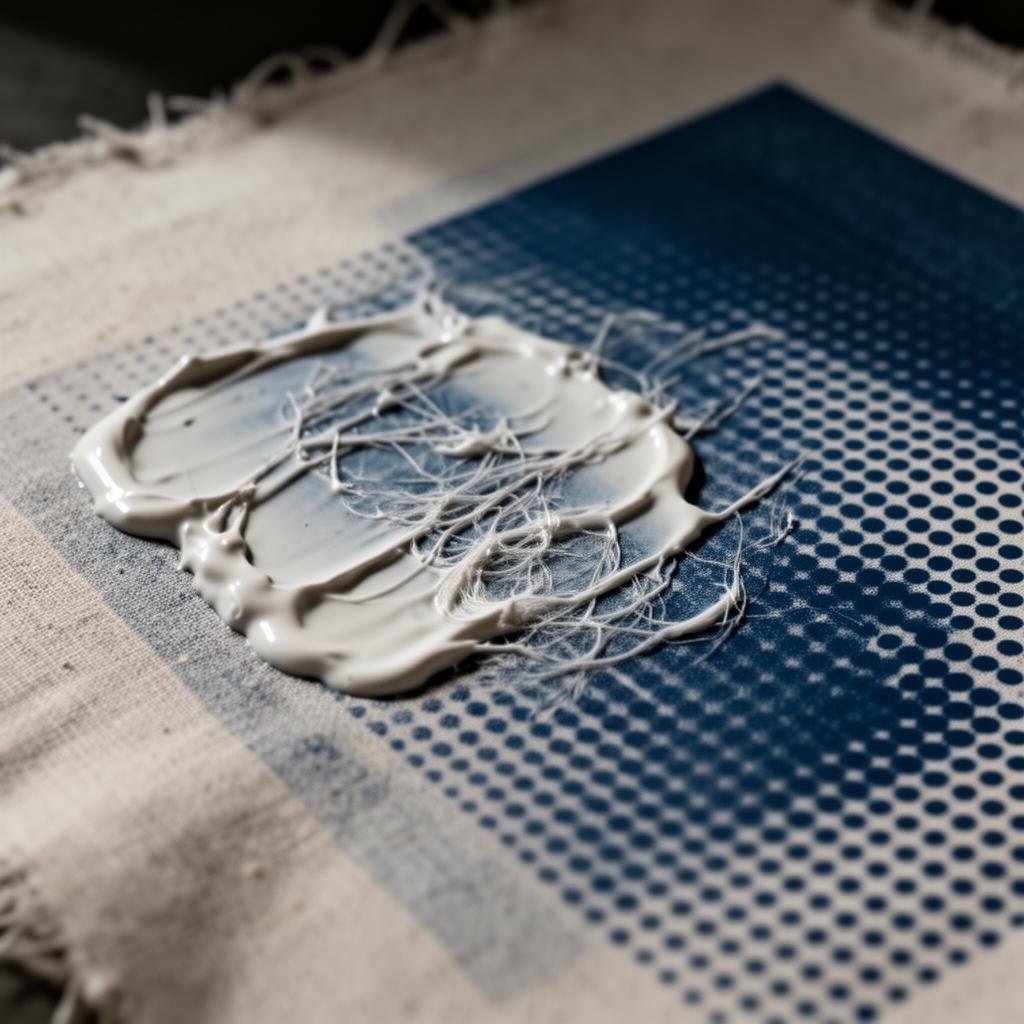
Plastisol
The workhorse
PVC-based ink that sits on top of the fabric in a thick, vivid, opaque deposit. Unbeatable on dark garments and the gold standard for sportswear, merch and bold graphics.
Best for
Cotton tees, hoodies, sportswear, dark colors

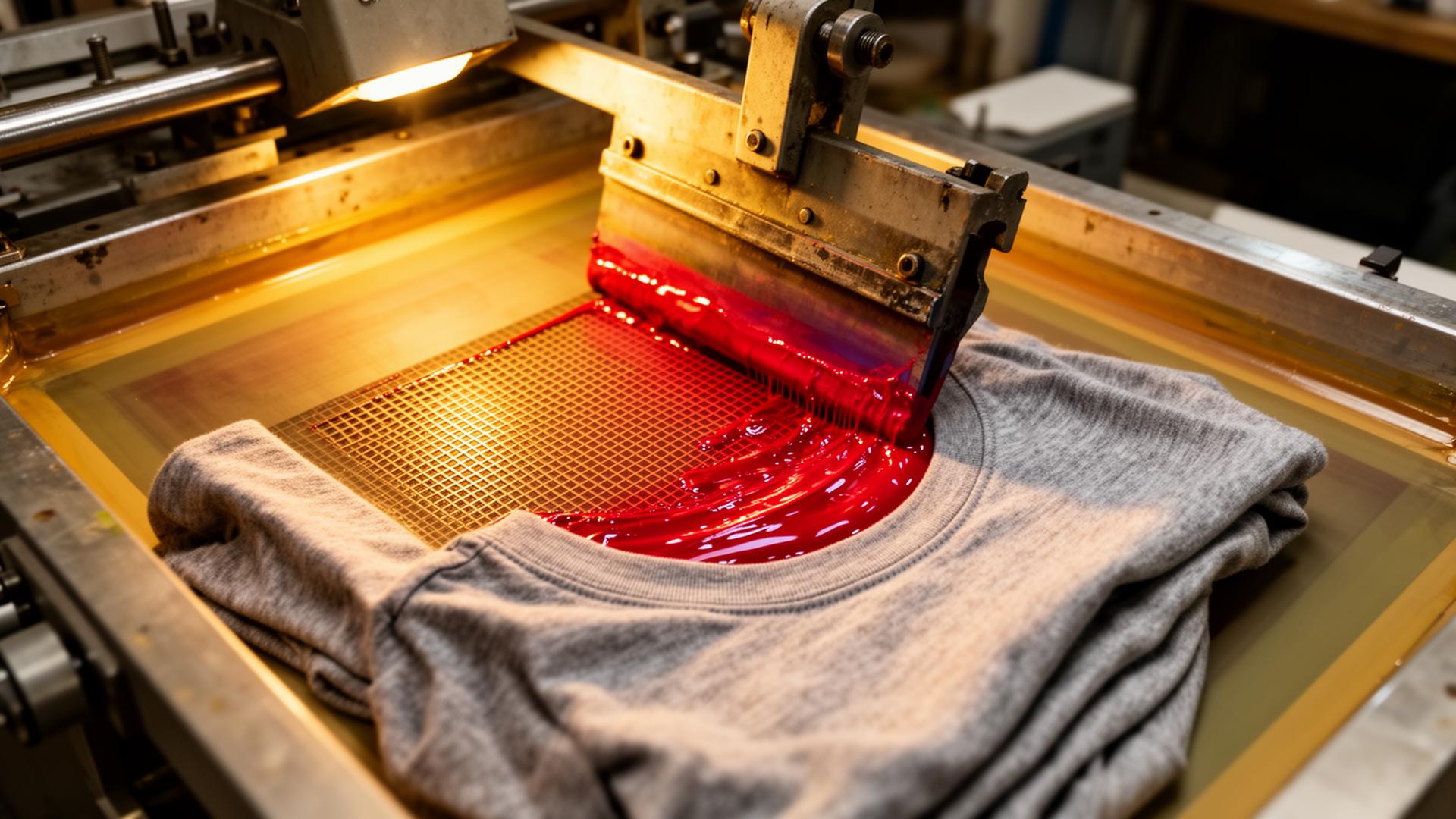
Silkscreen is the original printing craft, and still the most vivid. Thick, opaque ink pushed through fine mesh, cured into the fabric, built to outlast every wash you can throw at it.
The craft
Silkscreen, also called serigraphy, is a stencil-based printing process. A fine fabric mesh is stretched over an aluminum frame and coated with a UV-sensitive emulsion. Exposed under light through a film, the emulsion hardens everywhere except where your artwork sits. The unhardened areas wash out, leaving an open stencil.
On the press, a squeegee glides across the screen, forcing ink through those open meshes onto the support below. One screen, one color, one pass, repeated for every shade of your design. The result is a print with depth, opacity and a tactile presence no digital method can match.
The process
A polyester mesh stretched on an aluminum frame is coated with a photosensitive emulsion. Once dried, it forms a smooth, light-sensitive skin that will become our printable stencil.
A film carrying your artwork is laid over the screen and exposed to UV light. Where light hits, the emulsion hardens. Where the film blocks light, the emulsion stays soluble, and washes out with water to reveal the open mesh.
The screen mounts on the carousel press, registered against the others if the design has multiple colors. The garment is fixed flat on the platen by a vacuum suction table to prevent any movement.
Ink is flooded across the screen, then a squeegee glides under firm pressure, pushing pigment through the open mesh and onto the support. One pass per color, one screen at a time.
The print travels through a conveyor dryer at 160°C. Plastisol cures, water-based inks lock into the fibers, the print becomes permanent, wash-resistant, and ready to wear.
The inks
The ink choice defines the look, the feel and the longevity of the print. We help you pick the right system for your fabric, your audience, and your brand vocabulary.
The workhorse
PVC-based ink that sits on top of the fabric in a thick, vivid, opaque deposit. Unbeatable on dark garments and the gold standard for sportswear, merch and bold graphics.
Best for
Cotton tees, hoodies, sportswear, dark colors
The soft hand
Pigment penetrates into the fibers rather than sitting on top. The print becomes part of the fabric, soft to the touch, breathable, with a vintage, fashion-forward feel.
Best for
Premium tees, fashion brands, light garments
The dyed-out look
A bleaching agent removes the original dye and replaces it with new pigment in one pass. Zero hand-feel, ultra-soft finish, exclusive to 100% cotton and reactive-dyed garments.
Best for
100% cotton, soft vintage prints, retail apparel
Tactile finishes
Puff, metallic, glitter, glow-in-the-dark, suede, high-density, reflective. Used as accents to add dimension, sparkle or surprise to a flat print.
Best for
Accent details, premium merch, statement pieces
The palette
Every ink is hand-mixed by our pressmen against the official Pantone Solid Coated reference. We weigh, blend, then test on a sample of your exact garment before committing to the run.
Once a formula is approved, we archive it. Reorder six months or six years from now and your color comes back identical.
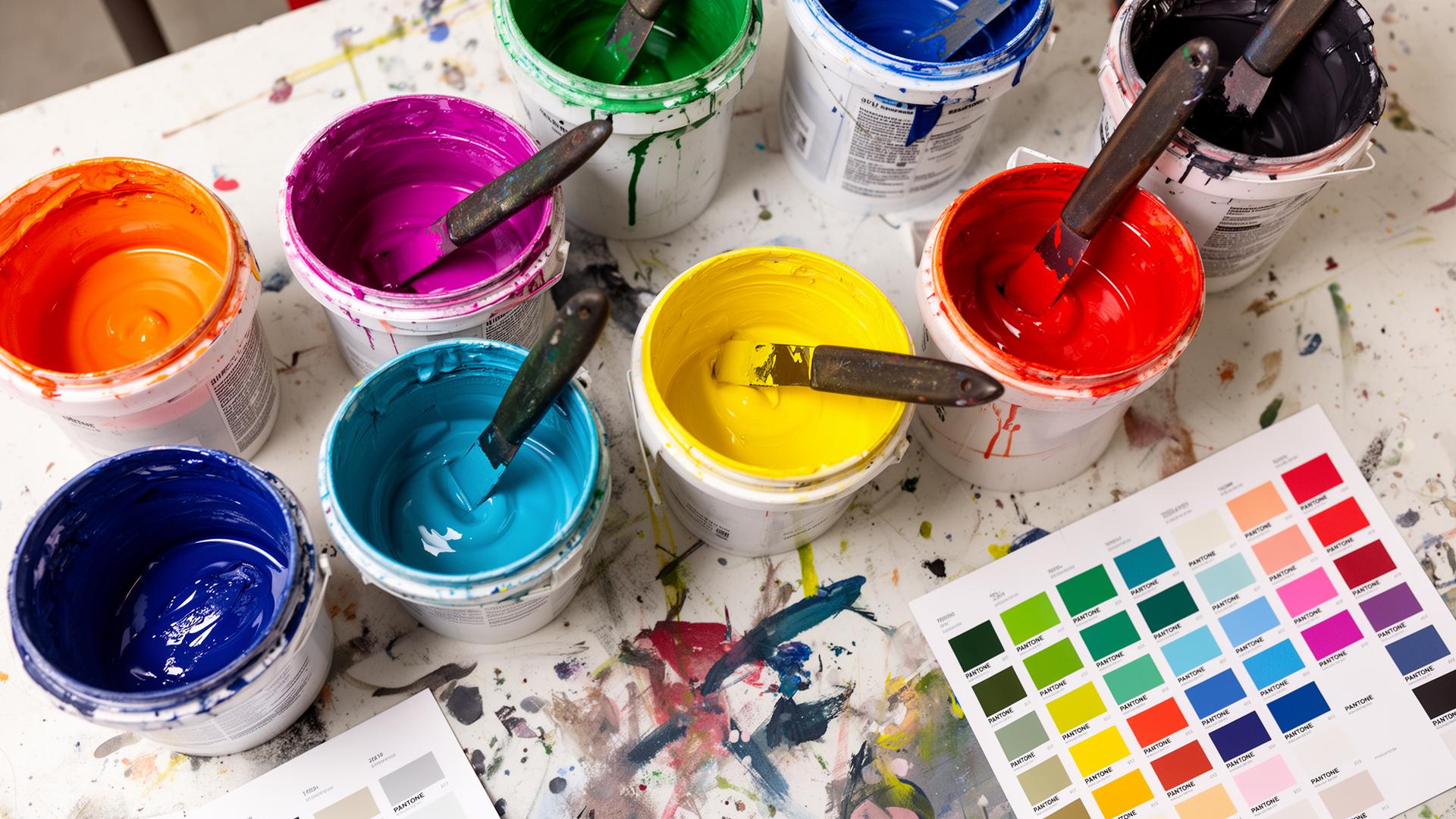
In-house mixing lab
Plastisol · Water-based · Discharge · Specialty
Why silkscreen
5 to 10× more pigment than digital methods, that's where the legendary opacity, vibrancy and longevity come from.
Properly cured silkscreen survives hundreds of industrial washes without cracking, peeling or fading.
Every ink is mixed in-house to your exact Pantone reference. Consistent, repeatable, run after run.
Cotton, polyester, blends, canvas tote bags, hoodies, posters, technical fabrics, different inks for every substrate.
Set-up is fixed; per-piece cost drops dramatically past 50 units. The most economical method for medium-to-large runs.
Thick, dimensional, almost three-dimensional under raking light. Nothing else looks like a true silkscreen.
Technical specs
Need oversized, all-over, or sleeve prints? We run jumbo platens and specialty fixtures on demand, just ask.
Ready when you are
Send us your artwork and quantities, we'll come back with ink recommendations, a strike-off plan, and a quote within 24 hours.